
Core Gameplay Loop
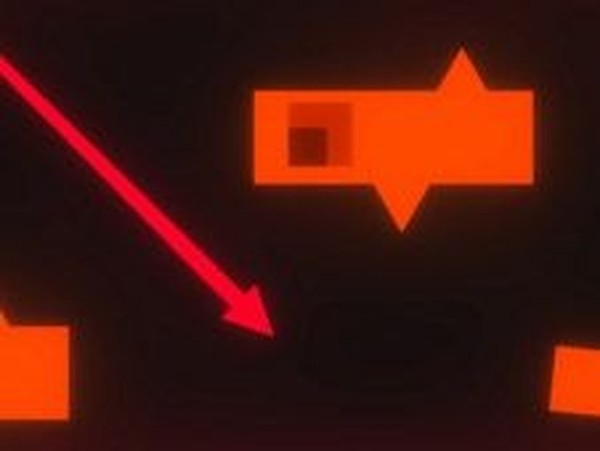
Glow Path Reflex centers on a single action: tapping to control vertical movement. Holding the screen makes the marker ascend; releasing lets it fall. This binary control system creates a steady rhythm as players navigate through a stream of geometric shapes. The challenge lies in matching the marker's position to gaps between obstacles, requiring precise timing rather than complex inputs.
Visual Style and Atmosphere
The game uses a dark background with bright neon lines and shapes, creating high contrast that makes obstacles easy to spot. The marker leaves a glowing trail, adding a sense of speed and motion. This clean visual design reduces eye strain during longer sessions and keeps the focus on the path ahead.
Obstacle Patterns and Progression
Obstacles appear as triangles, blocks, and circles arranged in varying patterns. Early runs feature simple gaps, but as distance increases, patterns become denser and require faster adjustments. The game does not introduce new mechanics over time; instead, it relies on increasing obstacle complexity to maintain difficulty. Each run is procedurally generated, ensuring no two attempts are identical.
Session Design and Replayability
Runs are short by design, typically lasting from a few seconds to a couple of minutes. This makes the game suitable for quick breaks or extended play. There are no checkpoints or continues—hitting any obstacle ends the run and resets progress. The only goal is to surpass your previous best distance, which encourages repeated attempts.
Device Compatibility and Controls
The game is optimized for touchscreens on mobile phones and tablets, with responsive controls that register taps and holds accurately. It also supports mouse input on desktop browsers. The control scheme is identical across all platforms, so players can switch devices without adjusting their technique.



Comments
0 comments